Kylian Mbappe's profile reads less like a conventional scouting report and more like a blueprint for the modern forward. He stands 178 cm tall, weighs roughly 73 kg, and carries a lean。explosive frame that clocked a top speed of 36 km/h in Ligue 1—a figure that places him among the fastest players in professional football. Those raw physical numbers matter, but they only explain part of the story. What separates him is how that speed pairs with close control, a low center of gravity, and a first touch that rarely lets him down in crowded areas.His attacking output has been remarkably consistent since his breakout season at Monaco. Across league campaigns for Monaco and Paris Saint-Germain, he has routinely exceeded 20 goals and 10 assists, with a shot conversion rate that hovers near 25 percent—well above the average for wide forwards in Europe's top five leagues. He takes penalties with a calm, repeatable routine。and his non-penalty expected goals per 90 minutes have stayed in the elite bracket for five straight seasons. That kind of stability is rare for a player whose game depends so heavily on acceleration and dribbling.Mbappe's profile is often misread as that of a pure winger. Watch him closely and the movement tells a different story. He drifts into the left half-space, receives on the back foot, and attacks the blind side of full-backs. When he starts centrally, he pins center-backs with his back to goal before spinning into the channel. His finishing is not just about power;he uses the inside of the boot to place shots into the far corner, and his body shape before striking is almost always balanced. One detail stands out from his Champions League performances: he generates a high volume of shots from outside the box, yet his accuracy from distance remains respectable。suggesting genuine technical range rather than hopeful shooting.
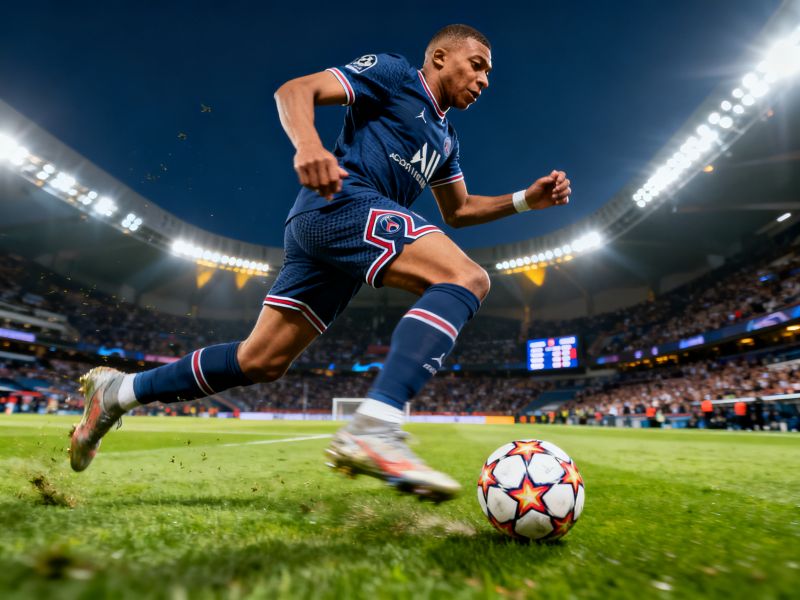
Critics point to his defensive contribution. His pressing numbers are modest compared to elite pressing forwards, and he can switch off when his team loses possession in the final third. That is a fair observation, though it ignores the tactical role he is often given—stay high。stay central, and preserve energy for transitions. In matches where his team dominates the ball, he becomes a penalty-box striker;
in open games, he is a counterattacking outlet. The profile is not one-dimensional, but it is role-dependent, and that nuance gets lost in the highlight reels.What makes Mbappe's profile genuinely distinctive is the combination of volume and efficiency at such a young age. He has already captained the national team, scored in a World Cup final, and delivered decisive goals in knockout rounds. The numbers are impressive, but the eye test matters too: the way he slows down just before a shot, the way he scans over his shoulder before receiving。the way he adjusts his stride to meet a cross. These small habits separate good forwards from great ones. Whether he rounds out his game with more consistent defensive work will determine how his profile ages, but the foundation is already among the most complete in world football.